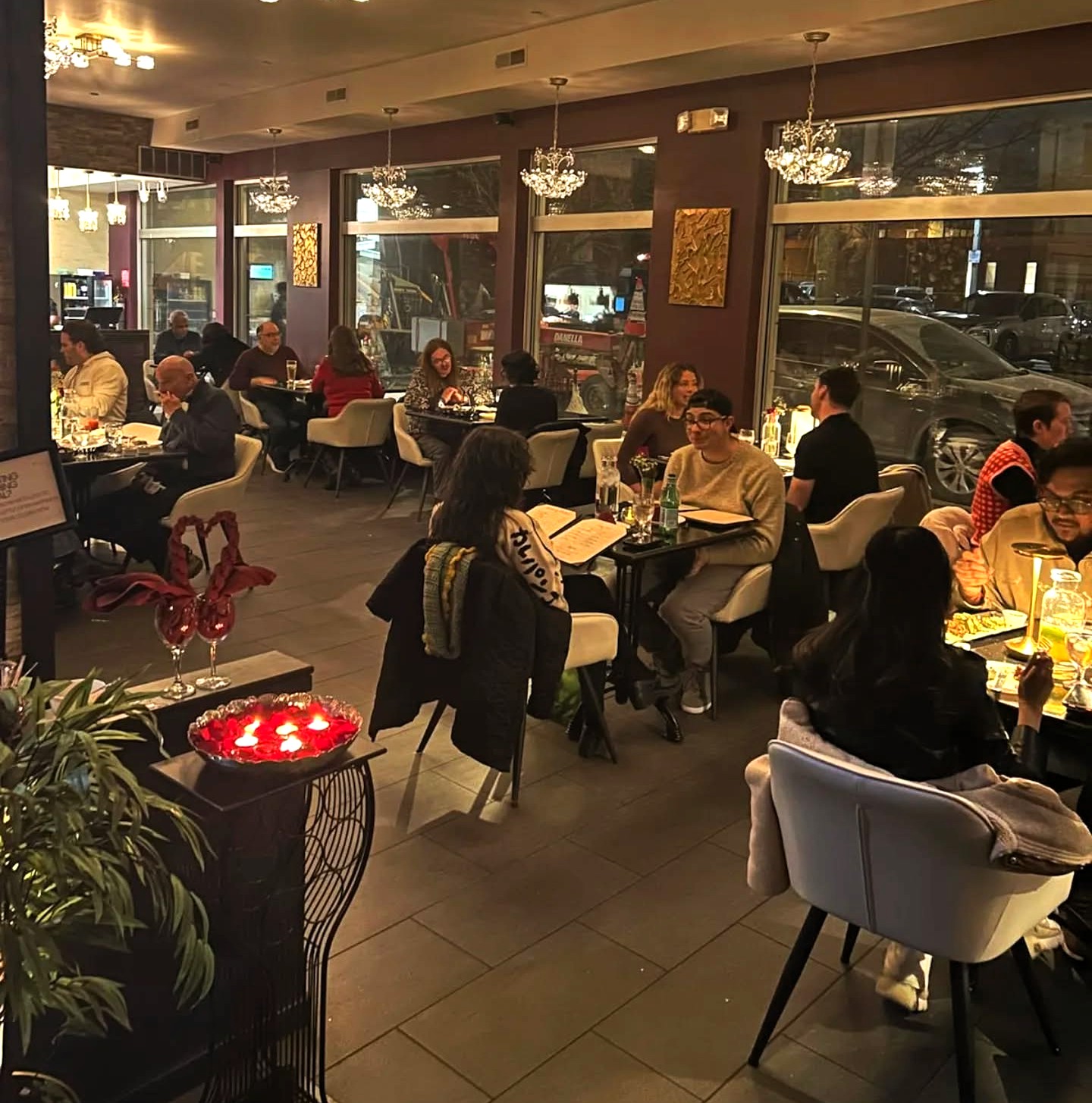
What started as a small delivery-focused Indian restaurant on Girard Avenue has grown into one of the region’s most influential dining destinations, helping introduce a generation of Philadelphia diners to Indian cuisine along the way.
Listen to this article as a video podcast.
Note the video podcast cuts off at 2:50, but the full podcast is 3:02.
Click below to listen to the final 12 seconds. Sorry about that!
For many Philadelphians, ordering Indian food today feels as routine as grabbing pizza or sushi. But 20 years ago, that wasn’t the case, and much of that shift can be traced back to one local restaurateur.
This month, Munish Narula is celebrating the 20th anniversary of Tiffin Indian Cuisine, the fast-casual Indian restaurant chain that helped bring Indian cuisine into the mainstream across the Philadelphia region. At the same time, Tiffin is relocating its original storefront at 710 Girard Avenue to 1040 N 2nd Street at Liberties Walk in Northern Liberties, near the Piazza.
Narula’s journey into the restaurant world was anything but traditional. A Wharton MBA graduate and former Wall Street investment banker, he left finance behind to pursue food full-time after launching Karma, an Indian restaurant in Old City, during a period when many American diners still viewed Indian cuisine as unfamiliar territory.
When Tiffin opened in 2007, the concept was ahead of its time. Narula envisioned a delivery-focused restaurant powered by a digital ordering platform being developed in India, years before apps like Uber Eats and Grubhub transformed the industry. The name itself was inspired by Mumbai’s famed “dabbawala” lunch delivery system, which has transported homemade meals across the city for generations using reusable metal containers called tiffins.
Over the past two decades, Tiffin has grown into a 10-location operation serving Philadelphia and the surrounding suburbs in Pennsylvania and South Jersey. Narula says the company’s success reflects how dramatically tastes have changed in the region.
In many ways, Tiffin also foreshadowed today’s fast-casual dining model, emphasizing streamlined service, takeout, and delivery long before those became industry norms.
The company continued innovating during the pandemic by introducing reusable, sanitized takeout containers through its “Return2Tiffin” program, an environmentally focused initiative designed to reduce the mountains of disposable packaging generated by food delivery.
Today, Indian restaurants are thriving throughout the Delaware Valley, and Narula says many local owners once worked for Tiffin, a sign that the restaurant’s influence may extend far beyond its own dining rooms.

Food enthusiast. Travel lover. Social media maven.
Independent Journalist. Food marketing/PR.
https://sogoodpr.com/
https://original.newsbreak.com/@marilyn-johnson-1587690
https://southjerseyfoodscene.com/
Email: phillygrub@gmail.com
Share this:

Marilyn Johnson

Food enthusiast. Travel lover. Social media maven. Independent Journalist. Food marketing/PR. https://sogoodpr.com/ https://original.newsbreak.com/@marilyn-johnson-1587690 https://southjerseyfoodscene.com/ Email: phillygrub@gmail.com

Leave a Reply